SKU:BAT0210
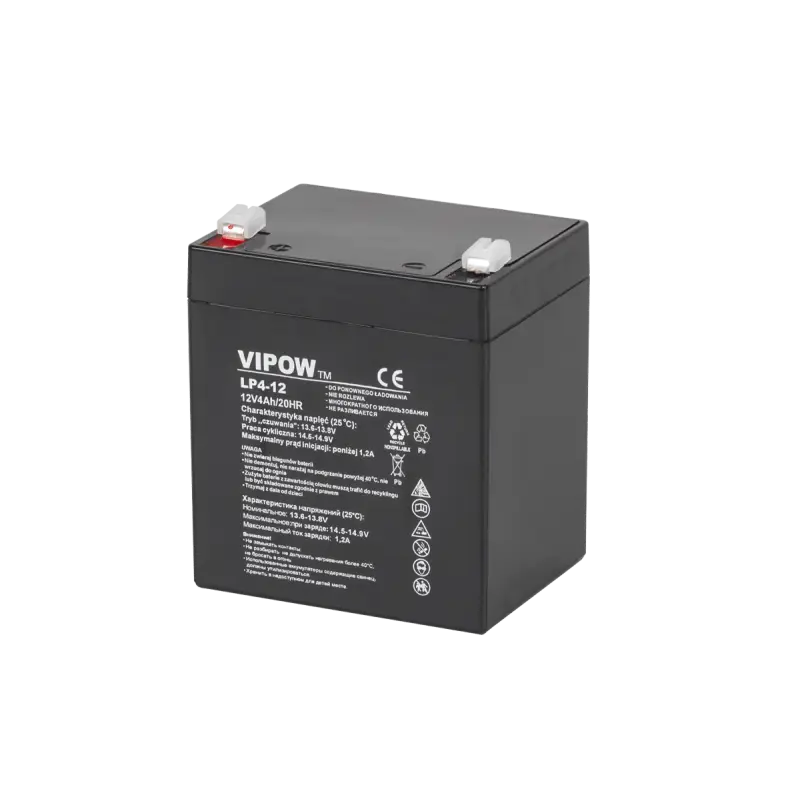
Image is for illustrative purposes only
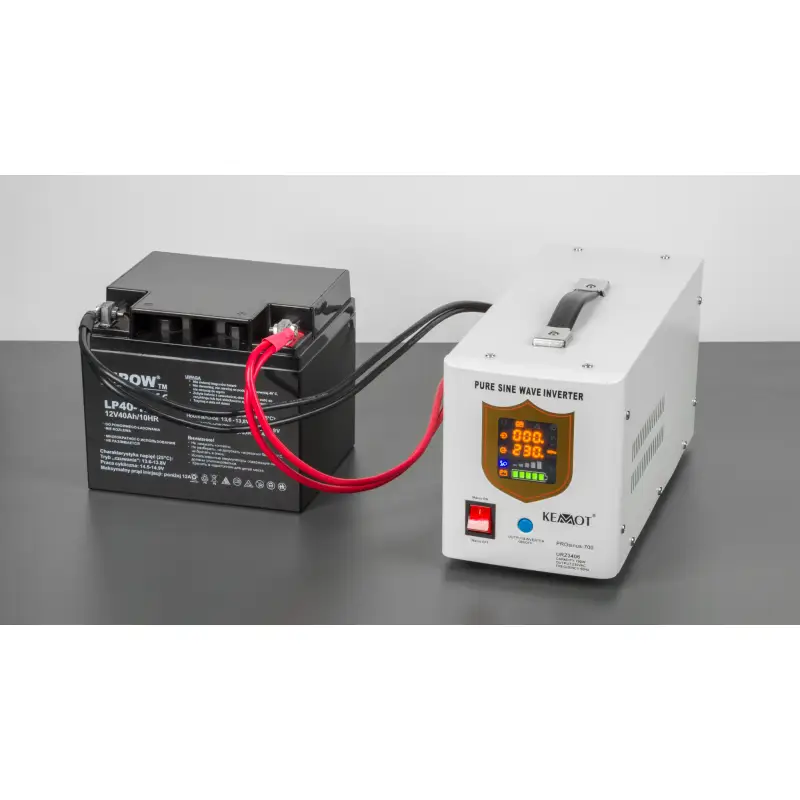
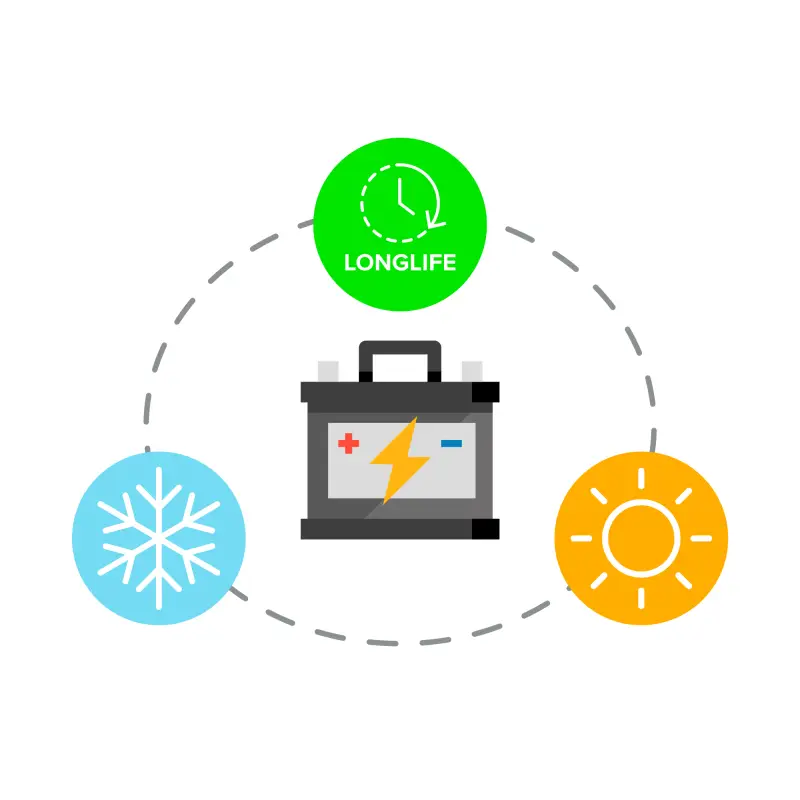
Vipow 12 V / 4 Ah Gel Battery Gel batteries have become an alternative to classic lead-acid batteries. Unlike the latter, gel models are maintenance-free batteries. This means that they do not require electrolyte replenishment. What speaks in their favor is the sealed housing and the electrolyte in the form of a gel. This guarantees that it will not leak, so the battery can be kept in any position and is more resistant to shocks.
Gel Battery Life One of the biggest advantages of gel batteries is their lifespan. Among those available on the market, this type has the longest lifespan, because when used properly, it can last even a dozen years. Importantly, gel batteries are also characterized by greater resistance to variable and extreme weather conditions.
Self-discharge (25°C) Gel batteries can be stored for many months without the need for charging. Their capacity drops to: 91% after 3 months 82% after 6 months 64% after 9 months
Selecting a Gel Battery Appropriate dimensions are not everything. When choosing a battery, you need to pay attention to its capacity - it should not be more than 110% or less than 90% of the capacity recommended for the device you plan to power. The output voltage is also important, the value of which must also be very close to the recommended one (+/- 0.2 V).
Applications of Gel Batteries Gel batteries are used in, among others, motorcycles, golf carts and lawnmowers. They are also used in uninterruptible power supplies (UPS), photovoltaic installations, alarm systems and electric toys. What's more, these batteries can be found in cars with a large number of electrical devices, e.g. campers. They are then used not to start the car, but to power electronic equipment.
Gel Battery Charger In order for the charger to perform its function well and not damage the battery, it must have appropriately selected current and voltage. In various stages of charging, these values will differ from each other, so it is worth choosing an automatic charger that will not only adjust the appropriate charging current and voltage, but also turn off when the battery is fully charged.
Gel Battery Life One of the biggest advantages of gel batteries is their lifespan. Among those available on the market, this type has the longest lifespan, because when used properly, it can last even a dozen years. Importantly, gel batteries are also characterized by greater resistance to variable and extreme weather conditions.
Self-discharge (25°C) Gel batteries can be stored for many months without the need for charging. Their capacity drops to: 91% after 3 months 82% after 6 months 64% after 9 months
Selecting a Gel Battery Appropriate dimensions are not everything. When choosing a battery, you need to pay attention to its capacity - it should not be more than 110% or less than 90% of the capacity recommended for the device you plan to power. The output voltage is also important, the value of which must also be very close to the recommended one (+/- 0.2 V).
Applications of Gel Batteries Gel batteries are used in, among others, motorcycles, golf carts and lawnmowers. They are also used in uninterruptible power supplies (UPS), photovoltaic installations, alarm systems and electric toys. What's more, these batteries can be found in cars with a large number of electrical devices, e.g. campers. They are then used not to start the car, but to power electronic equipment.
Gel Battery Charger In order for the charger to perform its function well and not damage the battery, it must have appropriately selected current and voltage. In various stages of charging, these values will differ from each other, so it is worth choosing an automatic charger that will not only adjust the appropriate charging current and voltage, but also turn off when the battery is fully charged.
Voltage: 12 V
Capacity: 4 Ah
Standby use (25°C): 13.6 - 13.8 V
Cyclic use (25°C): 14.5 - 14.9 V
Maximum initial current: < 1.2 A
Internal resistance (at full battery charge, 25°C): 32 mOhm
----------
Capacity (25°C)
----------
20-hour: 4 Ah
10-hour: 3.8 Ah
5-hour: 3.36 Ah
1-hour: 2.4 Ah
----------
Effect of temperature on capacity
----------
40°C: 102%
25°C: 100%
0°C: 85%
-15°C: 62%
----------
Self-discharge (25°C)
----------
Capacity after 3 months of storage: 91%
Capacity after 6 months of storage: 82%
Capacity after 9 months of storage: 64%
----------
Dimensions (LxWxH): 90 x 70 x 102 mm (height with terminals: 106 mm)
Weight: 1.4 kg
Warranty period for gel batteries is 12 months*
* - please read the warranty conditions for individual product categories - point 18 of the warranty
Capacity: 4 Ah
Standby use (25°C): 13.6 - 13.8 V
Cyclic use (25°C): 14.5 - 14.9 V
Maximum initial current: < 1.2 A
Internal resistance (at full battery charge, 25°C): 32 mOhm
----------
Capacity (25°C)
----------
20-hour: 4 Ah
10-hour: 3.8 Ah
5-hour: 3.36 Ah
1-hour: 2.4 Ah
----------
Effect of temperature on capacity
----------
40°C: 102%
25°C: 100%
0°C: 85%
-15°C: 62%
----------
Self-discharge (25°C)
----------
Capacity after 3 months of storage: 91%
Capacity after 6 months of storage: 82%
Capacity after 9 months of storage: 64%
----------
Dimensions (LxWxH): 90 x 70 x 102 mm (height with terminals: 106 mm)
Weight: 1.4 kg
Warranty period for gel batteries is 12 months*
* - please read the warranty conditions for individual product categories - point 18 of the warranty
-
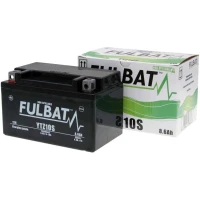 FTZ10S-FULBAT53.00 €Customer price50.35 €-5%
 -
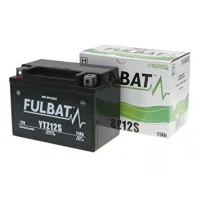 FTZ12S-FULBAT59.00 €Customer price56.05 €-5%
 -
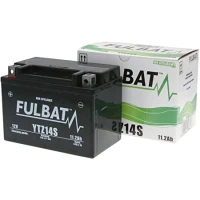 FTZ14S-FULBAT63.00 €Customer price59.85 €-5%
 -
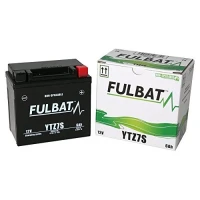 FTZ7S-FULBAT36.00 €Customer price34.20 €-5%
 -
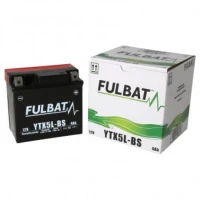 FTX5L-BS-FULBAT32.00 €Customer price30.40 €-5%
 -
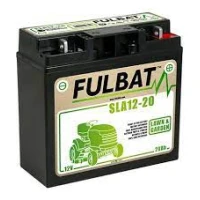 SLA12-20-FULBAT59.00 €Customer price56.05 €-5%
 -
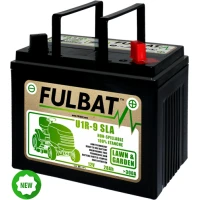 U1R-9-AGM-FULBAT65.00 €Customer price61.75 €-5%
 -
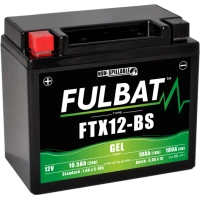 FTX12-BS-GEL64.00 €Customer price60.80 €-5%
 -
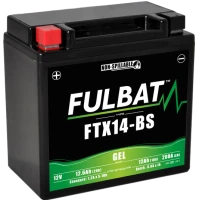 FTX14-BS-GEL72.00 €Customer price68.40 €-5%
 -
 BAT0499339.00 €Customer price322.05 €-5%
 -
 BAT-LI-12.8V100AH-WL299.00 €Customer price284.05 €-5%
 -
 FTX9-BS-GEL49.00 €Customer price46.55 €-5%